After working for years with offices of all sizes—from small home setups to large corporate environments—I’ve learned one thing very clearly: filing cabinets remain one of the most reliable ways to store documents. While digital tools continue to grow, physical records are still essential for contracts, legal papers, invoices, and confidential files. The right storage solution doesn’t just hold paper; it improves productivity, protects sensitive information, and keeps workspaces organized.
This guide is written from hands-on experience and practical use cases. It explains what these storage units are used for, explores the most common types, and helps you understand how to choose the right option for your needs—whether for a corporate office or home office organization.
Content
Understanding Filing Cabinets and Their Purpose
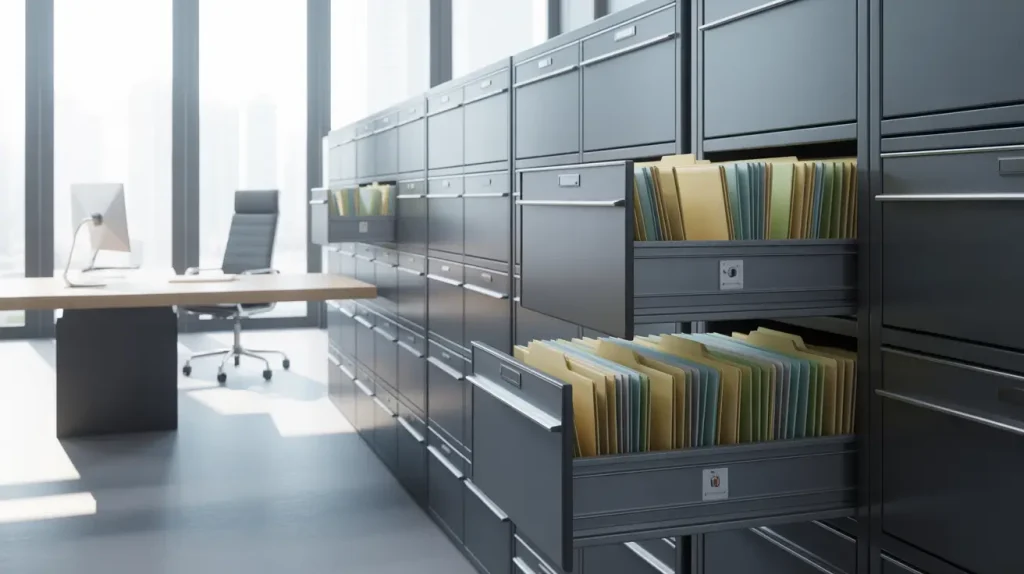
At their core, filing cabinets are storage units designed to organize, protect, and provide easy access to documents. Over the years, I’ve seen businesses struggle simply because paperwork was scattered across desks, shelves, or unsecured drawers. Proper storage eliminates that problem by creating a centralized and structured system.
So, what are these cabinets used for in real life?
Storing contracts, employee records, and legal documents
Organizing invoices, receipts, and financial paperwork
Protecting confidential files from unauthorized access
Improving workflow by reducing time spent searching for documents
In both small and large workplaces, they serve as the backbone of document management.
Types of Filing Cabinets Based on Design and Layout
One of the most common mistakes buyers make is choosing a cabinet without considering space and workflow. Below are the most widely used designs, along with insights from real office environments.
Vertical Cabinets
Vertical cabinets are tall and narrow, making them ideal for offices with limited floor space. Files are stored front to back, which helps keep documents categorized clearly. From experience, these work exceptionally well in accounting offices where daily file access is frequent but space is tight.
Best suited for:
Small offices
Personal workstations
Areas with limited wall space
Lateral Cabinets
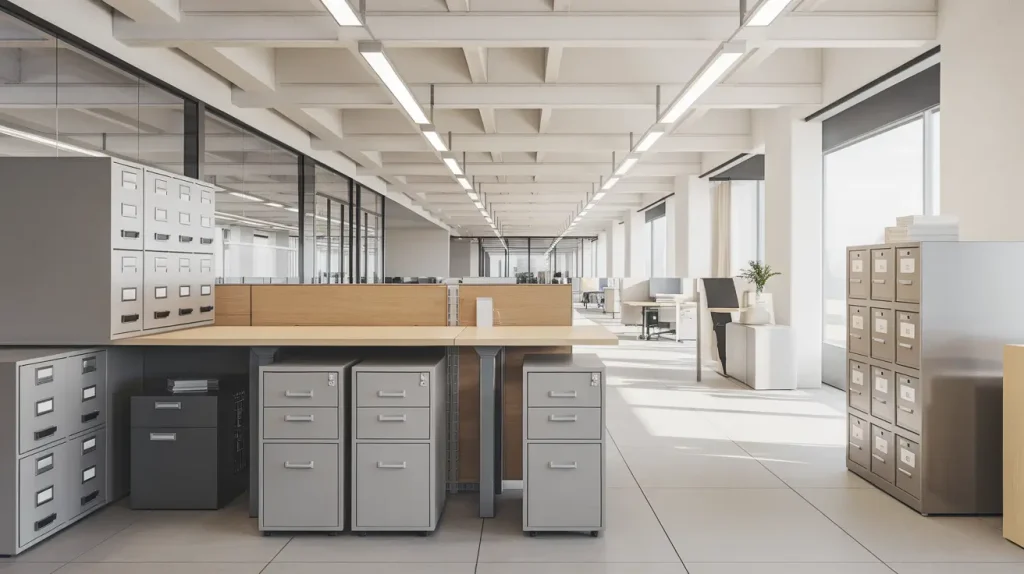
Lateral cabinets are wider and shorter, allowing files to be stored side by side. These are often placed against walls and can double as work surfaces. In legal firms I’ve consulted for, lateral cabinets were preferred because multiple staff members could access files simultaneously without congestion.
Best suited for:
Large offices
Shared workspaces
High-volume document storage
Mobile Cabinets
Mobile cabinets, often called pedestals, come with wheels and compact drawers. They’re designed for flexibility and easy movement. I personally use one in my own workspace. It fits neatly under my desk and stores daily-use documents without clutter.
Best suited for:
Home offices
Flexible workstations
Employees who need quick access to files
Open-Shelf Cabinets
These cabinets provide fast visibility and access but minimal protection. While not ideal for sensitive records, they are excellent for reference materials. They are commonly used in design studios or classrooms where accessibility matters more than security.
Types of Cabinets Based on Special Features
Beyond design, certain cabinets are built to solve specific problems such as security, safety, and long-term durability.
Fire-Resistant Cabinets
Fire-resistant cabinets are engineered to protect documents during extreme heat exposure. I’ve seen these make a critical difference in offices handling legal deeds and historical records.
They are especially valuable for:
Legal firms
Financial institutions
Government offices
High-Security Cabinets
When confidentiality is a priority, secure storage units are essential. These feature advanced locking systems and reinforced materials.
From HR departments to medical offices, secure solutions help meet compliance requirements while preventing data breaches.
Materials and Build Quality
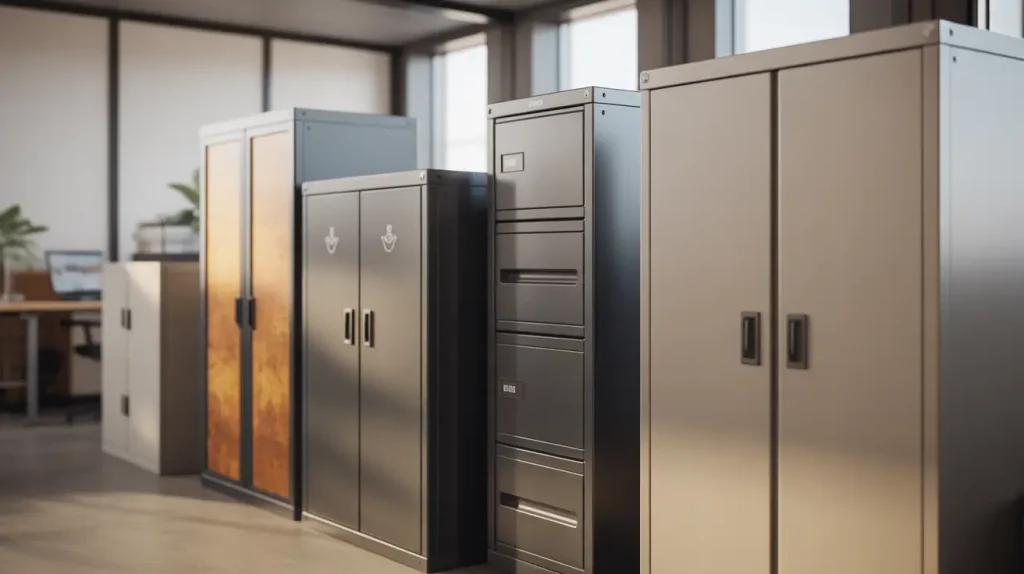
The material of a filing cabinet impacts its durability and purpose. Based on field experience, metal cabinets are the most reliable for long-term business use. Wooden cabinets, while visually appealing, are better suited for executive offices or home environments.
Metal cabinets offer:
Greater durability
Better fire resistance
Enhanced security features
Wood cabinets offer:
Aesthetic appeal
Quiet drawer operation
Suitability for low-risk environments
How to Choose the Right Filing Cabinet
Knowing how to choose the right filing cabinet can save both time and money. I always advise clients to evaluate their needs before making a purchase.
Key factors to consider:
Available space and layout
Volume of documents
Level of security required
File size compatibility (A4, legal, letter)
Frequency of access
For example, filing cabinets for home office organization should prioritize compact design and ease of access, while corporate offices should focus on durability and security.
Real-Life Case Study: Transforming a Growing Office
A mid-sized consultancy firm once approached me with a productivity issue. Employees were spending excessive time searching for documents, and confidential files were stored in unlocked drawers.
The Challenge
Disorganized paperwork
No centralized document system
Security concerns
The Solution
We implemented a mix of lateral and vertical cabinets, along with labeled filing systems. Secure storage units were installed for HR and finance departments.
The Result
Document retrieval time reduced by over 40%
Improved compliance and data protection
Noticeable boost in employee efficiency
This case highlights how proper document storage solutions directly impact workflow and professionalism.
Best Practices for Filing Cabinet Organization
Even the best cabinet won’t perform well without proper organization. Over the years, I’ve found these strategies highly effective:
Use clear labels and consistent naming conventions
Separate active and archived files
Regularly audit and remove outdated documents
Store sensitive files in locked drawers
These simple habits extend the usefulness of filing cabinets and keep offices running smoothly.
Why Cabinets Still Matter Today
Despite the shift toward digital systems, physical records remain a legal and operational necessity. These storage solutions provide reliability that technology sometimes cannot—no power outages, no system crashes, and no subscription costs.
When used correctly, they become long-term assets that support organization, security, and productivity.
Final Thoughts
Choosing the right filing cabinet is more than a furniture decision—it’s an investment in efficiency and professionalism. Whether you’re managing a busy corporate office or setting up a home workspace, understanding the different types and their real-world uses makes all the difference.
From personal experience, well-chosen storage solutions create calmer, more productive environments where employees can focus on what truly matters. With the right approach, your document system can work for you—not against you. For more information visit our website ideasforhomedecor
FAQ’s:
Are filing cabinets still useful in digital offices?
Yes. Filing cabinets securely store legal and backup documents that must remain physical despite digital systems.
Which filing cabinet is best for small spaces?
Vertical or mobile office filing cabinets work best for tight spaces while keeping documents accessible.
Do filing cabinets help with document security?
Absolutely. Secure filing cabinets protect sensitive records with locks and reinforced construction.
Can filing cabinets improve office productivity?
Yes. Proper filing cabinet storage reduces search time and keeps workflows organized.
Kitchen counters often become the most used—and most cluttered—areas in a home. From morning coffee routines to late-night snacks, this space carries a lot of daily activity….
Choosing the right cabinet colors can completely transform your kitchen. Over the years, I’ve worked with homeowners, interior designers, and contractors, and one thing is clear: the…
Modern kitchens are evolving rapidly, with technology redefining how we cook, clean, and even ventilate our spaces. One of the latest innovations gaining attention is the portable…
When it comes to home improvement, kitchen remodeling is a significant investment and you want to ensure you choose the best in the business to craft your…
When it comes to home design, small kitchens can pose a special challenge. But with a little creativity and some expert guidance from kitchen remodeling experts, you…